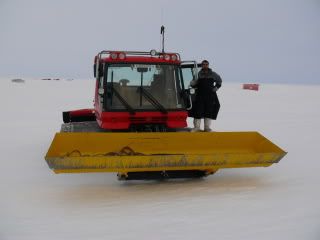
The preparations for the convoy were extensive. The vehicles needed to be in top notch condition for the strenuous journey on the vast ice sheets. Spares had to be carefully listed out. Each screw could prove vital. The convoy generator- Jeevan Jyoti was serviced. Food rations for upto one month were carefully stocked. This was done keeping in mind the omnipresent risk of blizzards halting the convoy enroute for weeks. Apart fromraw material, packaged food prepared by Defence Food Research Laboratory, Mysore were supplied to us. Namkeens, sweets, biscuits, cold drinks etc wee also stored in the Banjara. LPG cylinders were a standard inclusion in our inventory. The preparations were completed one day before the convoy departed.
On the night prior to the departure of the convoy, the rest of the team members prepared food packets for the onward journey, and filled water cans. The food packets contained boiled eggs, paranthas and alu sabzi, along with freshly made besan ki barfi or ladoo. Apart from these, each individual carried food according to his own taste and liking.
The convoys departed at 4 am sharp after a short briefing by the convoy chief. The vehicles proceeded like a train in a specific order. Each vehicle stuck to its position in the train. The 1st vehicle tugged the Banjara- the living module and the second, the Jeevan Jyoti. The rest of the vehicles tugged trailers with or without load.
The convoy train slowly wound its way out or the rocky Schirmacher Oasis. Once we reached Dozer Point, where the continental ice cap started, the sped increased considerably. We then continued straight to Shivling, where we ascended the ice cap, took a U turn and proceeded towards Sankalp Point. At Sankalp, Banjara and Jeevan Jyoti were towed. Food packets were also distributed here. Sometimes trailers were left here before hand and hence were hooked to the Pisten Bullys here. From here on, we were out of the limits of Maitri.
On the night prior to the departure of the convoy, the rest of the team members prepared food packets for the onward journey, and filled water cans. The food packets contained boiled eggs, paranthas and alu sabzi, along with freshly made besan ki barfi or ladoo. Apart from these, each individual carried food according to his own taste and liking.
The convoys departed at 4 am sharp after a short briefing by the convoy chief. The vehicles proceeded like a train in a specific order. Each vehicle stuck to its position in the train. The 1st vehicle tugged the Banjara- the living module and the second, the Jeevan Jyoti. The rest of the vehicles tugged trailers with or without load.
The convoy train slowly wound its way out or the rocky Schirmacher Oasis. Once we reached Dozer Point, where the continental ice cap started, the sped increased considerably. We then continued straight to Shivling, where we ascended the ice cap, took a U turn and proceeded towards Sankalp Point. At Sankalp, Banjara and Jeevan Jyoti were towed. Food packets were also distributed here. Sometimes trailers were left here before hand and hence were hooked to the Pisten Bullys here. From here on, we were out of the limits of Maitri.