One can safely say that the convoys are the heart and soul of a wintering over team in Antarctica, especially at an inland station. Since we were 100 km away from the coast, the same held true for Maitri as well.
The purpose of the convoys is to bring the winter supplies to the station from the coast, where the ship offloads them during the summers. They are run during the winters only, because during the summers, crevasses and water channels open up, making it difficult and dangerous for the snow vehicles to negotiate the vast ice fields.
Because of the extreme climatic conditions and inhospitable terrain on which the convoys are run, they are the most daunting and challenging tasks of the expedition. This is one event that consumes most of our energies and time during the winters, and are of utmost importance for the survival of wintering teams in Antarctica. Our top priority is successful and uneventful completion of the convoys.
At Maitri, the convoys usually start by the end of the February, after the first winter blizzard, that fills up the icy moraines and fissures formed on the route due to the summer ice melt. This usually coincides with the departure of the summer team.
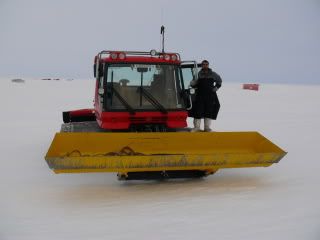
The snow vehicle used at Maitri are the Pisten Bullys. They tow the cargo on trailers. There are 8-9 vehicles and 8-9 personnel including a doctor (that was me). Each person was in charge of one vehicle throughout the expedition. Each convoy team member has a specific role. One person is designated as the convoy chief, one person is the vehicle electrician, one crane operator, and the rest are vehicle mechanics. In our expedition, these personnel were either from the Border Roads Organisation or ex servicemen with previous Antarctica experience. Occasionally, some scientists also accompanied us for data collection on the ice shelf.
The purpose of the convoys is to bring the winter supplies to the station from the coast, where the ship offloads them during the summers. They are run during the winters only, because during the summers, crevasses and water channels open up, making it difficult and dangerous for the snow vehicles to negotiate the vast ice fields.
Because of the extreme climatic conditions and inhospitable terrain on which the convoys are run, they are the most daunting and challenging tasks of the expedition. This is one event that consumes most of our energies and time during the winters, and are of utmost importance for the survival of wintering teams in Antarctica. Our top priority is successful and uneventful completion of the convoys.
At Maitri, the convoys usually start by the end of the February, after the first winter blizzard, that fills up the icy moraines and fissures formed on the route due to the summer ice melt. This usually coincides with the departure of the summer team.
The snow vehicle used at Maitri are the Pisten Bullys. They tow the cargo on trailers. There are 8-9 vehicles and 8-9 personnel including a doctor (that was me). Each person was in charge of one vehicle throughout the expedition. Each convoy team member has a specific role. One person is designated as the convoy chief, one person is the vehicle electrician, one crane operator, and the rest are vehicle mechanics. In our expedition, these personnel were either from the Border Roads Organisation or ex servicemen with previous Antarctica experience. Occasionally, some scientists also accompanied us for data collection on the ice shelf.


No comments:
Post a Comment